
On April 16, 2021 big news was issued from NASA regarding their future plans for the Artemis Program. Previously, they had announced that by 2024 astronauts are scheduled to land on the lunar surface once again, including the first woman and first person of color.
how does the future of SpaceX tie into any of this? Well, NASA plans to use portions of their budget for Artemis to hire independent contractors that will provide additional equipment and technology. And, this past April, NASA granted SpaceX a whopping $2.9 billion in exchange for the development and use of a lunar lander to be used by the Artemis astronauts.
It’s true that since then Jeff Bezos and his aerospace company Blue Origin have filed a protest and thus NASA’s contract with SpaceX is suspended. Even so, it is likely that the contract will go through eventually and in their modern space race with Blue Origin it could undoubtedly be a big leap forward, and one that could potentially propel SpaceX to domination of the private space industry.
Future Projects Already In Motion
While the lunar lander for Artemis missions could certainly be a large project for SpaceX in the future, by no means is it their most complex or time consuming endeavor. In fact, the lunar lander is only one variant of one of their biggest projects, Starship. Below are some of SpaceX’s largest and potentially most groundbreaking developments, that are either already partially in use or in the testing phase.
Starship
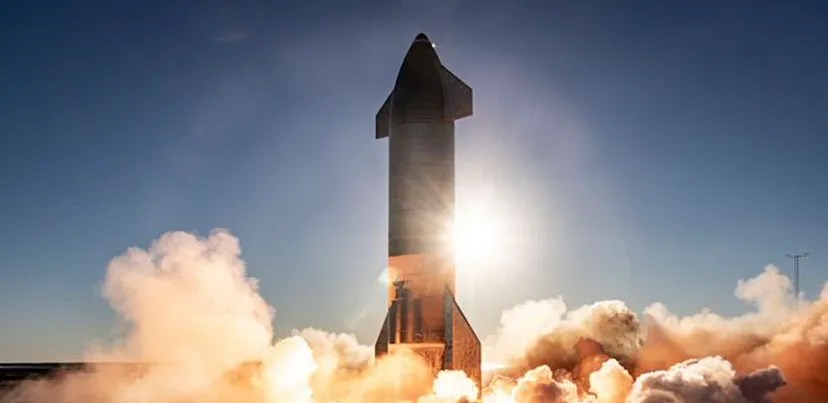
Possibly one of the most well-known future projects for SpaceX is the making of Starship. With development beginning back in 2012, Starship will be an absurdly complicated spacecraft with different variants. SpaceX plans to have the first Starship ready to launch by 2023, and a fleet of them manufactured in the years after. They will all be fairly similar, but some Starships will be designed for Earth to Earth transportation, some for transporting large payloads, a few for landing on the Moon during Artemis missions, and some will serve other purposes.
With many malfunctions during test flights of prototype Starship rockets, the future was not looking bright for the spacecraft. However, on May 5, 2021 Starship prototype SN15 completed the first successful high-altitude flight test, with all systems functioning nominally and a smooth landing. It’s hard to get a good idea of the scale of it from most pictures, but Starship truly is a massive rocket, and one capable of carrying 100 astronauts into orbit, as well as potentially to Mars one day.
Starlink
Starlink is an incredibly ambitious project aimed to provide high-speed and low-latency internet to locations across the globe for a fraction of the price that many older and more established telecommunication companies are offering.
The difference between normal satellite internet and what Starlink hopes to accomplish isn’t too complex at its core.
- For the satellite internet we have today, there is one very large satellite circling the globe, about 22,000 miles above the surface of the Earth. However, the internet being provided is limited to coming from just one satellite, and because that satellite is required to be so far from Earth the internet speeds are often slow.
- Starlink, on the other hand, will be a connection of much smaller satellites. They will orbit the Earth significantly closer, at about 300-400 miles above the surface. As of June 2021, around 1,500 Starlink satellites are estimated to be in space and operational. SpaceX plans to launch a total of 12,000 satellites by the end of 2025, and then an additional 30,000 in the years afterwards if they are permitted to.
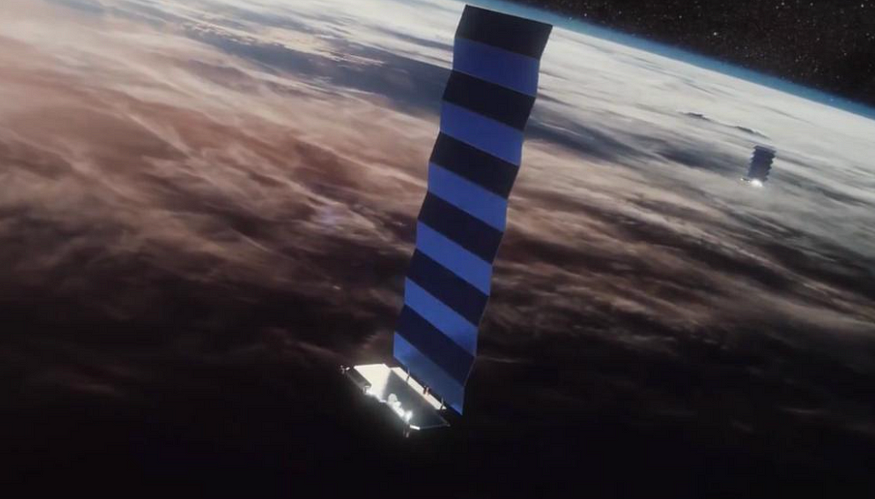
The process to connect to and use Starlink’s internet is quite simple. You just need to have a small satellite dish, similar to those used for other internet providers only not quite as large.
According to SpaceX president Gwynne Shotwell, if Starlink could acquire 25 million users then they would be profiting about $30 billion per year, much more than launching satellites earns them as of now. That money could help to fund the manufacturing of Starship and other future projects such as infrastructure on Mars.
While Starlink sounds great, especially considering its low price, there are some pretty big issues caused by the network of satellites. For starters, they can be pretty bright. Even without a telescope you can see some passing through the night sky if you live in the right area.
Unfortunately, Starlink satellites are most bright around dawn and dusk, which is the time when astronomers are performing critical observations to determine if there are any objects that could potentially collide with Earth. To address this, SpaceX has used a dark paint to coat the brightest part of the satellites, but even then they’re still fairly bright. And, with more satellites being added to the network every month the light pollution can only get worse.
Another problem caused by Starlink is space debris. Even though SpaceX has stated that Starlink satellites have the ability to maneuver to avoid other objects in space, there have already been some that are unable to do so. Highly unlikely as it is, if 42,000 Starlink satellites were orbiting the Earth and some of them experienced malfunctions resulting in immovability, the problem could rapidly get out of control.
If a few satellites were to collide that would only create more space debris that could collide with other satellites, and in a worst case scenario there could end up being so much debris circling the Earth that outer space would be deemed unsafe because of the chances of debris hitting rockets as they exit the atmosphere.
Projects to be Started in the Coming Years
Ambitious as Starship and Starlink are, SpaceX has even greater future plans. In an ideal world, they would use revenue from Starlink to fund their large future plans detailed below.
Space Tourism To the Moon
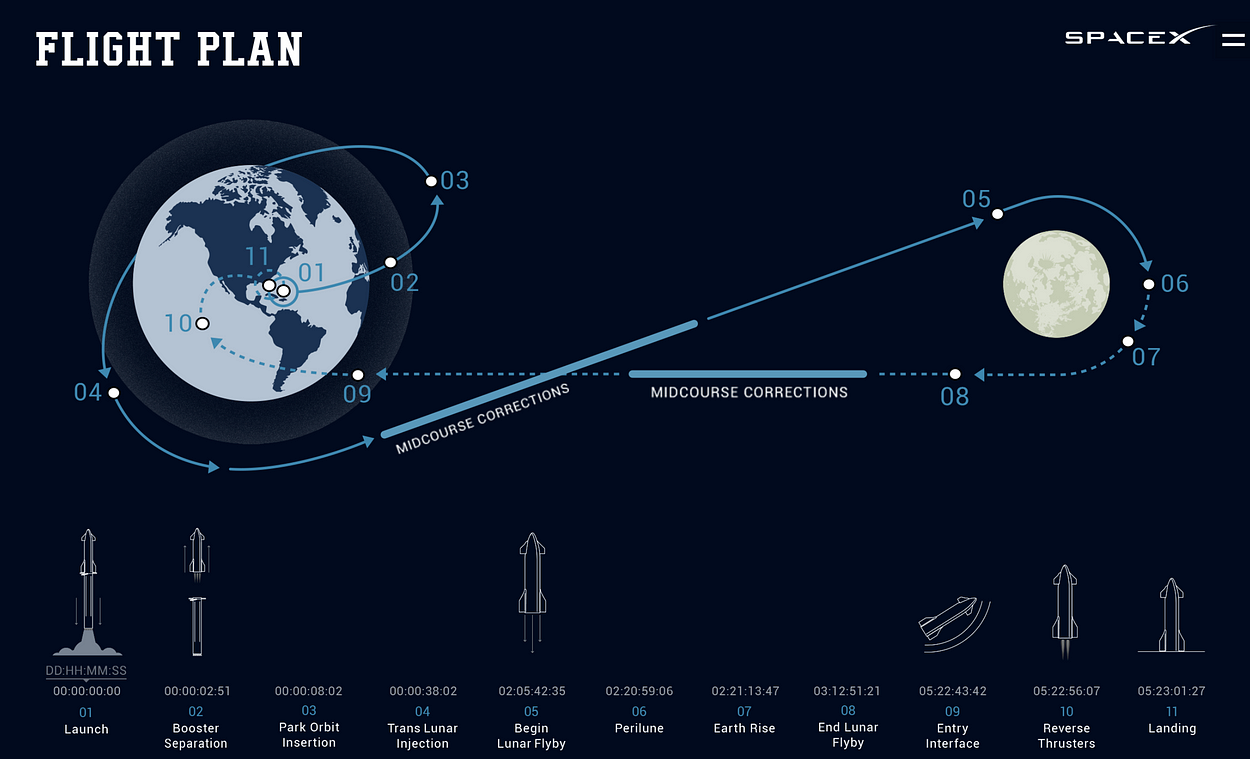
In addition to likely designing a lunar lander for NASA’s Artemis missions, SpaceX also plans to supply a Starship for the dearMoon project. Funded by Japanese billionaire Yusaku Maezawa, the dearMoon project aims to bring Maezawa, eight civilians, and likely one or two crew members on a trip to orbit the Moon and then return to Earth.
Applications for astronauts are open to anyone, although Maezawa stated he wanted mainly artists to travel with him. If the project stays on schedule then they will launch in 2023, but recently there have been doubts expressed as to whether or not Starship will be fully ready to carry passengers by then. If the dearMoon mission goes well it would be very likely that other billionaires may be interested in doing some sort of space tourism.
Colonization of Mars
After the development of many Starship rockets, Musk and SpaceX hope to send humans to Mars by 2026, and to have a colony of one million people living there by 2050. By crunching the numbers and thinking practically you can begin to realize that it’s unlikely such a large number of people will have a home on a planet 34 million miles away at its closest in less than thirty years.
However, it is still very much possible that SpaceX is able to transport a decent amount of people to Mars, and more importantly provide the infrastructure and life support systems needed to maintain a colony on the red planet. Musk himself has said that SpaceX aims to launch three Starships per day to bring people and supplies to Mars.
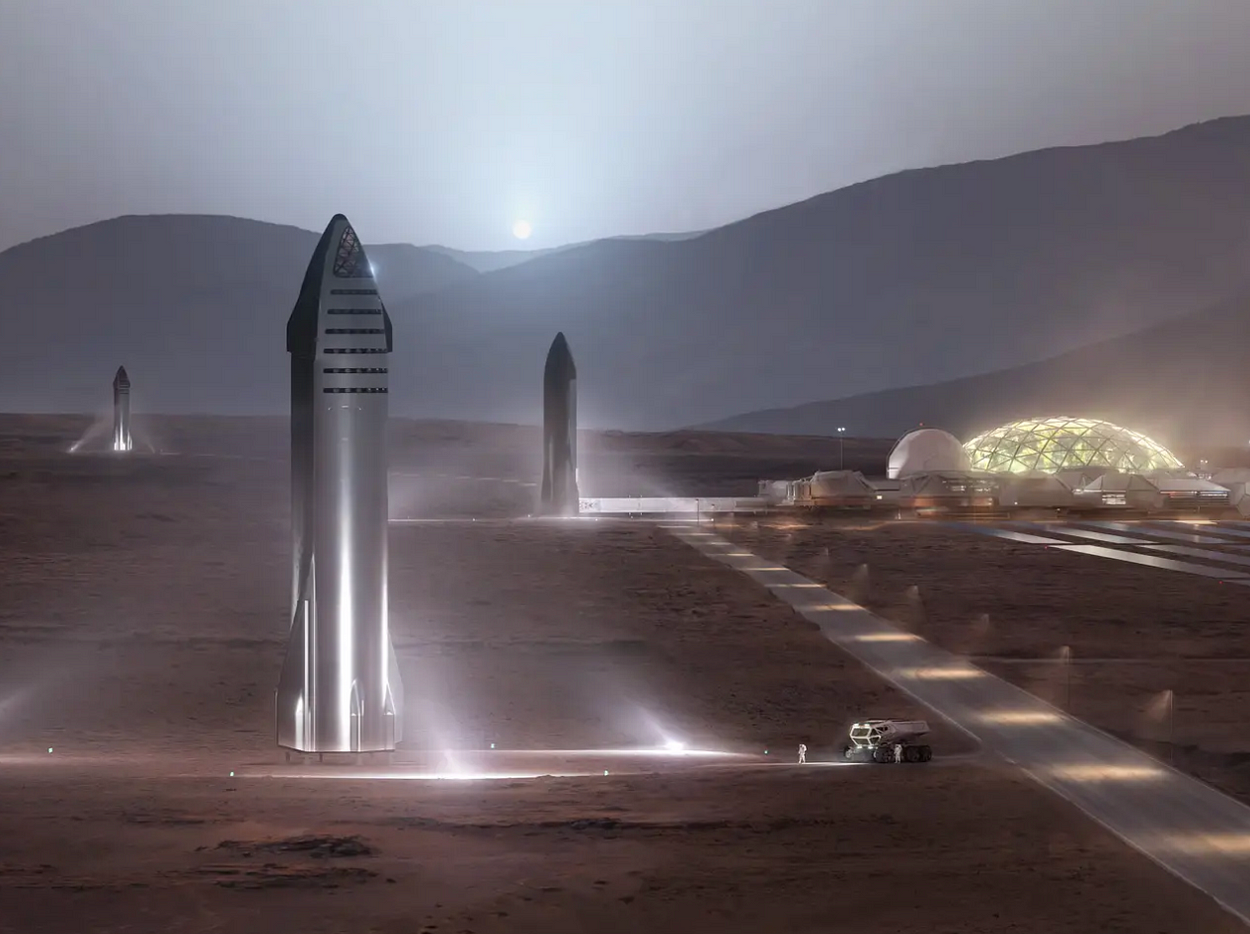
If SpaceX were to launch three Starships every day that would be a true feat of both engineering and manufacturing prowess. After all, they may be reusable but if they’re traveling all the way to Mars there would need to be thousands to sustain that flow of necessary supplies.
In addition, SpaceX would have to actually build a habitat for Martian colonists, whether that’s underground to protect from radiation or a series of cylindrical and dome-like structures to ensure the inside pressure stays at a good level.
Once the colony gets more established it will hopefully grow to be more and more self-sufficient, but until then there’s still lots of work to be done


 NEWS
NEWS 